Municipal sewer work often needs to take place without fully closing the surrounding roadway. That makes traffic control an important part of keeping work zones organized and crews protected as they carry out repairs, maintenance, and upgrades on public streets.
Innovative traffic control technologies can help municipalities manage these conditions more effectively while supporting established safety procedures. Here’s a closer look at the challenges sewer crews face and seven ways technology can help.
Why municipal sewer work zones present unique safety challenges
Planning traffic control for sewer projects can be especially demanding because the work often needs to continue while the surrounding street remains in use. Several conditions can make these work zones more difficult to manage safely:
- Deep excavations and open manholes: Sewer repairs and installations may involve deep trenches or exposed structures near moving traffic. A vehicle entering the work area can endanger both the driver and workers below ground level.
- Limited working space: Service vehicles, pumps, tools, construction equipment, and excavations can take up much of the available roadway, leaving crews with little room to work.
- Worker exposure to traffic: Many sewer tasks require workers to spend long periods close to active lanes, sometimes with limited physical separation from passing vehicles.
- Changing traffic patterns: Lane closures, temporary shifts, and access restrictions may change as the work progresses. Drivers need clear, consistent guidance to navigate the work zone safely.
- Restricted sightlines: Equipment, work vehicles, barriers, and excavation areas can make it harder for drivers to see workers or upcoming traffic changes.
- Multiple activities at the same time: Excavation, inspections, pipe repairs, equipment movement, and traffic control may all be happening at once. Keeping those activities coordinated is essential.
How technology can improve safety in municipal sewer work zones
Technology gives municipal teams more ways to see what’s happening, communicate with drivers, and manage traffic without putting workers in unnecessary danger.
1. Automated flagging keeps workers farther from traffic
Flagging is often necessary when sewer work requires a temporary lane closure. But traditional flagging can mean spending hours close to approaching vehicles.
Automated Flagger Assistance Devices, such as Guardian SmartFlagger, allow operators to control traffic remotely. This reduces the time workers spend directly beside moving traffic while still letting crews manage vehicle flow through the work zone.
For sewer projects with tight working areas or limited separation from traffic, that extra distance can be especially valuable.
2. Vehicle detection gives crews more time to react
When workers are focused on an excavation, underground repair, or operating equipment, they can’t always watch approaching traffic at the same time.
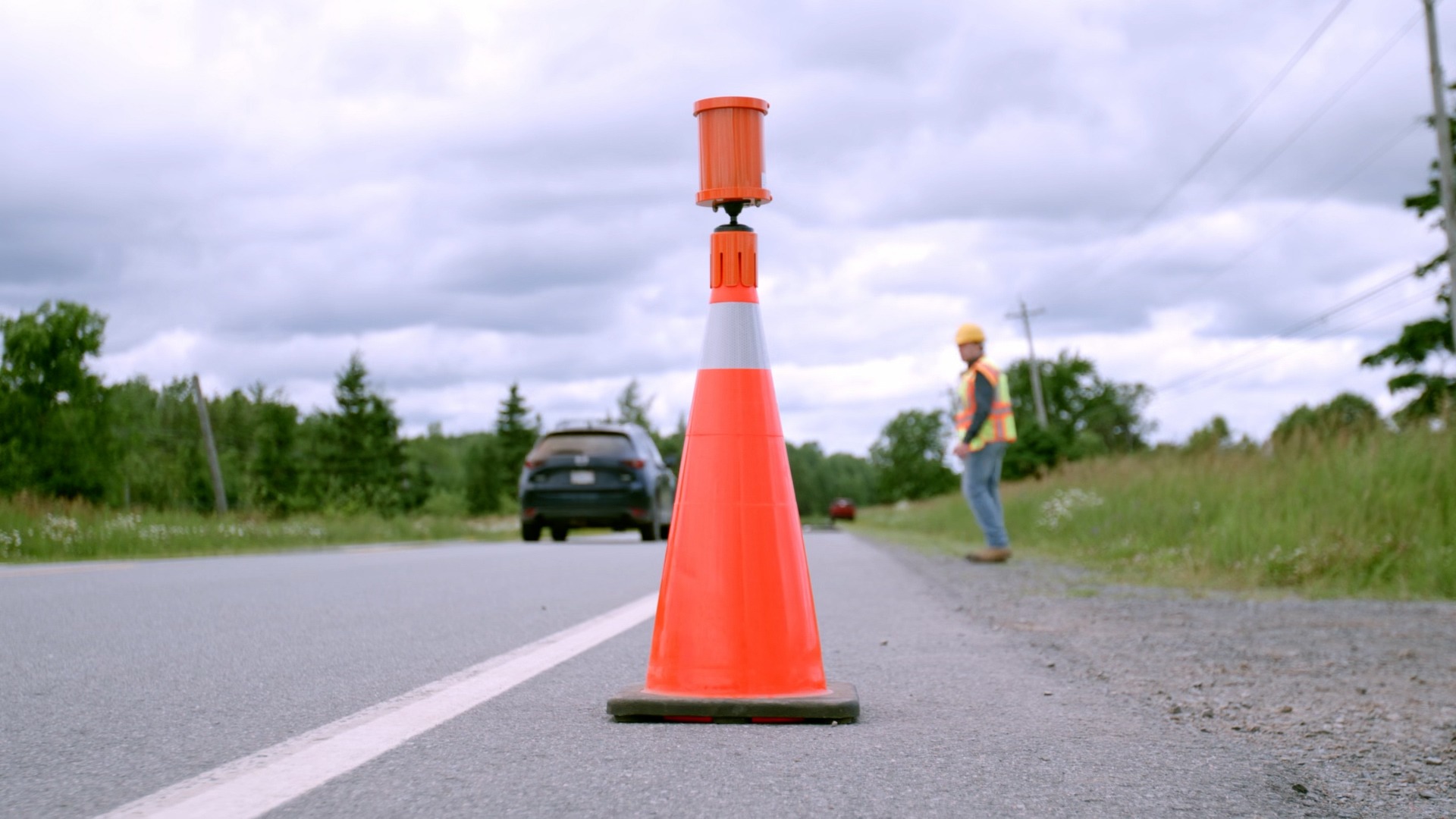
Vehicle detection technology can provide an extra layer of awareness. Guardian Cone Pro, for example, detects approaching vehicles and can alert crews to potential hazards.
An early warning gives workers more time to react if a vehicle approaches unexpectedly. That can be particularly useful on higher-speed roads or around restricted sightlines.
3. GPS-enabled signs make temporary signage easier to monitor
Temporary signs don’t always stay where they’re placed. Wind, passing vehicles, or construction activity can move signs out of position, making important guidance less visible and potentially creating safety or compliance concerns.
For municipalities managing several active work zones, physically checking every sign throughout the day can take significant time.
Guardian Smart Sign uses GPS tracking to give supervisors better visibility into sign locations. If a sign moves from where it’s expected to be, teams can be alerted and act quickly instead of waiting to discover the issue during the next site check.
4. Remote cameras improve site visibility
A sewer work zone can look very different throughout the day as traffic levels and construction activity change. Remote cameras let supervisors and operators view conditions across the site without relying entirely on in-person checks.
Teams can use that visual information to spot traffic buildup, unusual driver behavior, or changes around the work area. From there, they can determine whether the current traffic control setup still fits site conditions or needs attention.
5. Real-time traffic updates improve driver awareness
During sewer repairs or maintenance, real-time traffic information, such as portable changeable message signs or municipal traffic alerts, can warn drivers about lane closures, delays, or alternate routes ahead of the work zone.
Earlier information may help reduce sudden lane changes or turns near the work area. It can also help residents and local businesses plan around temporary access changes caused by sewer work.
6. Connected work zone systems improve field coordination
Municipalities may have several sewer repair or maintenance projects underway at the same time. A connected smart traffic control system can bring information such as device status, locations, alerts, and site activity into one central view.
Having that information in one place can help field crews and supervisors stay aligned as conditions change. It can also make it easier to respond to issues without relying entirely on separate phone calls or field reports.
7. Digital records support safer planning
Connected work zone technology can automatically create records of traffic activity, device alerts, equipment status, and incidents. Instead of relying only on memory or individual field reports, municipal teams have a clearer record of conditions throughout the project.
After the project, teams can review that information to identify recurring issues, evaluate how the traffic control setup performed, and make more informed decisions when planning similar sewer work in the future.
What should municipalities consider when choosing work zone technology?
The right technology should fit the type of sewer work being performed, the conditions around the site, and the way crews already manage traffic control. When comparing options, municipalities should consider
- Ease of setup and deployment
- Remote monitoring capabilities
- Connectivity and power requirements
- Training needed for field crews
- Ability to move equipment between sites
- Compatibility with existing traffic control plans
- Applicable federal, state, and local requirements
The goal should be to give crews and supervisors better information and greater control without making day-to-day work more complicated.
A smarter approach to sewer work zone safety
Technology works best as part of a well-planned traffic control approach. Automated flagging, vehicle detection, GPS tracking, cameras, connected systems, and digital records each address a different part of the safety challenge.
For municipalities looking to improve visibility, reduce roadside exposure, and take a smarter approach to traffic control for sewer projects, Site 20/20 offers connected solutions that help make work zones safer and easier to manage. Book a demo today.
Frequently asked questions
What are the biggest safety risks in municipal sewer work zones?
Key risks include moving traffic, limited workspace, excavations, heavy equipment, changing traffic patterns, reduced visibility, and unexpected driver behavior.
How can municipalities reduce traffic-related risks around sewer construction?
Municipalities can combine sound traffic planning, clear signage, appropriate barriers, remote traffic control, vehicle detection, and regular monitoring throughout the project.
What technology can help monitor temporary traffic signs?
GPS-enabled sign systems can track sign locations, alert teams when devices move, and create records that support work zone inspections and oversight.
Can work zone technology replace trained traffic control personnel?
No. Technology supports trained personnel by improving awareness, remote visibility, documentation, and control, while workers remain responsible for proper setup and operation.
How can remote monitoring help municipalities manage multiple sewer work zones?
Remote monitoring can give supervisors visibility into several active sites, helping them identify issues sooner, coordinate field teams, and reduce unnecessary site visits.