Finding qualified flaggers has become a growing staffing challenge for contractors managing road construction, utility maintenance, and temporary traffic control projects. When trained personnel are in short supply, companies can struggle to fill scheduled shifts, manage multiple work zones, or take on additional projects.
In 2026, the ongoing shortage of certified flaggers is prompting contractors to rethink how they manage their crews. From employee training and better scheduling to automated traffic control technology, companies are exploring practical ways to keep operations running while keeping workers safe around moving vehicles.
Why the flagger shortage continues in 2026
Several factors are making it difficult to recruit and retain qualified traffic control flaggers. Roadside flagging requires workers to remain alert while standing near moving vehicles, often in challenging weather and changing traffic conditions. Long shifts, irregular schedules, and travel between job sites can also make these positions difficult to fill.
Training requirements create another challenge. Flaggers must understand traffic control procedures, hand signals, warning signs, and safe work practices. Certification and qualification requirements vary by state and contracting authority, which can limit the pool of eligible workers for certain projects.
Broader construction workforce conditions also affect hiring. According to a September 2026 Associated General Contractors of America workforce survey, construction firms continue to report difficulties finding qualified workers, with labor shortages contributing to project delays.
While the survey covers the construction industry as a whole rather than certified flaggers specifically, it shows how widespread these workforce challenges have become.
How does the flagger shortage affect construction projects?
When contractors cannot secure enough qualified flaggers, the impact can quickly spread across a project. Road construction and utility projects often need traffic control personnel in place before work can safely begin.
A shortage can lead to several operational challenges:
- Project delays: Work may need to be postponed until the required traffic control personnel are available.
- Higher labor costs: Contractors may face additional overtime, recruitment, and travel expenses to cover staffing gaps.
- Scheduling conflicts: Assigning available flaggers to one project can leave other job sites understaffed.
- Reduced project capacity: Companies may have to decline additional work because they cannot provide the required traffic control coverage.
- Increased workload: Available personnel may be asked to cover additional shifts, making fatigue management particularly important.
For a traffic control flagger company handling several projects simultaneously, these challenges can make it difficult to maintain reliable service and meet client expectations.
How can contractors manage a shortage of certified flaggers?
Contractors can take several steps to improve staffing availability without compromising work zone safety. The most practical approaches focus on developing existing employees, making better use of available personnel, and improving retention.
Investing in flagger training and certification
Training existing employees can help contractors expand their pool of qualified flaggers. Workers already familiar with construction environments may be suitable candidates for additional traffic control training.
Companies can arrange approved training programs that cover flagging procedures, temporary traffic control devices, emergency responses, and applicable safety requirements.
Refresher training can also help experienced flaggers maintain their skills and stay informed about changes in safety standards or project requirements.
Improving scheduling and workforce management
Effective workforce planning helps contractors assign qualified flaggers where they are needed most. Reviewing project timelines, shift requirements, and employee availability can help identify scheduling conflicts before work begins.
Digital scheduling and dispatch systems can help supervisors track employee qualifications, coordinate assignments, and respond to unexpected absences.
Maintaining a clear record of available workers and upcoming projects makes it easier to allocate workers across multiple job sites.
Retaining experienced traffic control personnel
Retaining experienced flaggers can reduce the time and costs associated with repeatedly recruiting and training new employees. Contractors can support retention by improving working conditions, addressing scheduling concerns, and providing opportunities for career advancement.
For example, experienced flaggers could be given opportunities to advance into supervisory, training, or equipment operation roles.
Competitive pay, predictable schedules when possible, appropriate safety equipment, and regular communication can also encourage experienced flaggers to stay with the company.
The role of technology in supporting traffic control with limited staff
Technology offers contractors another way to manage staffing challenges. An automated flagging system can reduce the number of personnel required for certain traffic control operations, while monitoring devices help existing crews perform their duties with better information.
Site 20/20 offers several smart traffic control products designed to support different aspects of work zone management.
Guardian SmartFlagger for remote traffic control
The Guardian SmartFlagger is an Automated Flagger Assistance Device (AFAD) that allows trained operators to manage traffic from a position away from approaching vehicles.
Instead of standing directly beside moving traffic, an operator can use a tablet and live camera feeds to monitor conditions and control the equipment remotely.
One operator can manage up to four SmartFlagger units within a work zone. This capability may reduce staffing needs on suitable projects, depending on the approved traffic control plan and applicable regulations.
The device also features 360-degree cameras, a detachable gate arm, and local network connectivity. These features support traffic management while reducing the operator’s direct exposure to passing vehicles.
Guardian Cone Pro for approaching vehicle alerts
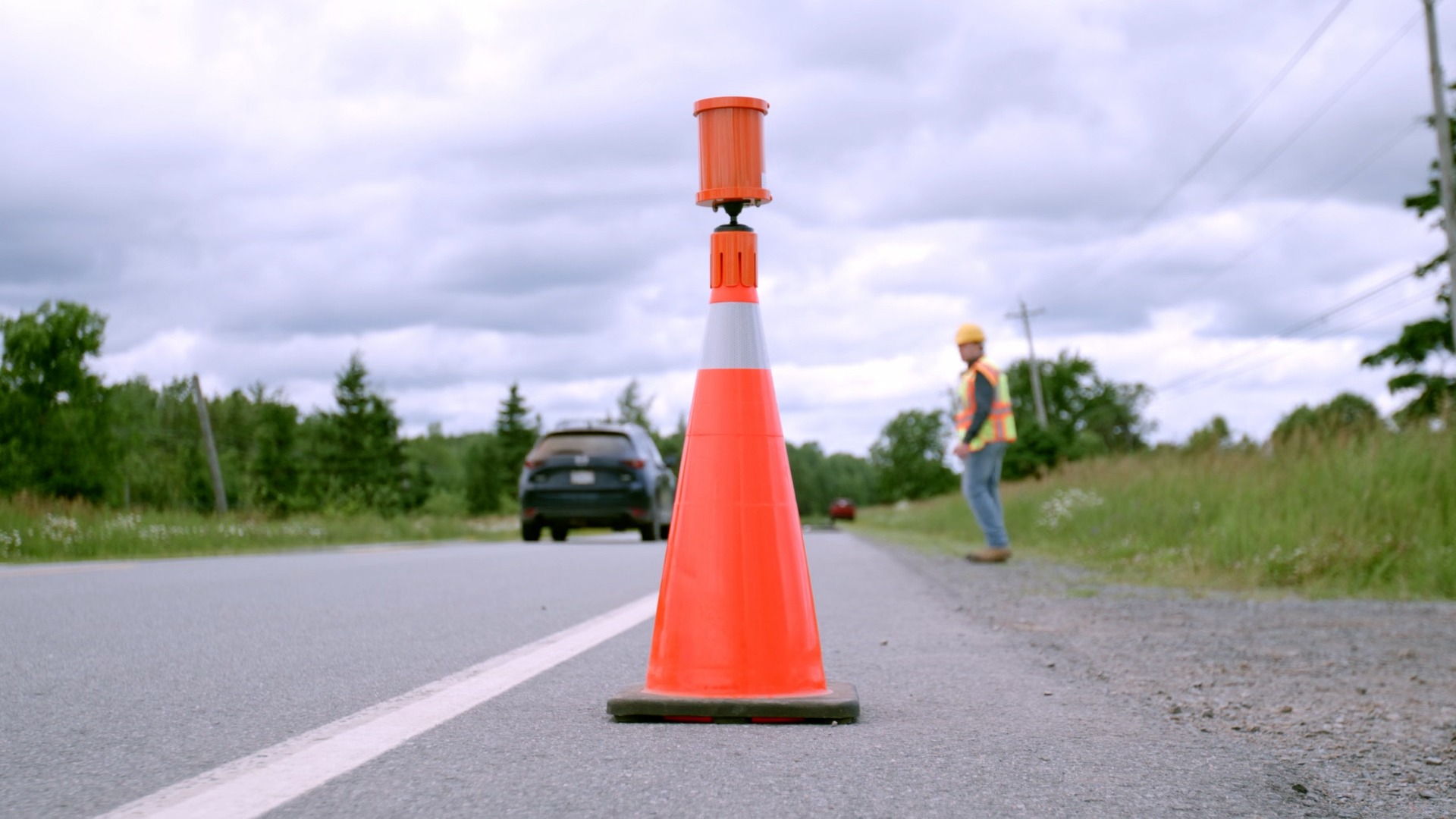
The Guardian Cone Pro helps roadside crews stay aware of approaching traffic. It uses radar-based detection to monitor vehicles and provide real-time alerts about potential hazards.
With a detection range of up to 500 feet, the device can warn workers about approaching vehicles and their speeds. It is particularly useful during work zone setup, roadside maintenance, and activities where crews work close to traffic.
The system also collects vehicle counts and speed data, which can be reviewed through Site 20/20’s Partner Portal.
Guardian Smart Sign for remote signage monitoring
The Guardian Smart Sign helps contractors monitor temporary traffic signs between site visits.
Using GPS tracking, the device provides information about sign locations and helps supervisors check their placement against approved traffic control plans. It can also send alerts when signs are moved, knocked over, or potentially tampered with.
Supervisors can review these alerts and access digital setup records remotely to identify signs that may need inspection or repositioning.
For companies managing multiple work zones, remote signage monitoring can reduce unnecessary site visits and allow available personnel to focus on tasks that require their physical presence.
Conclusion
The staffing challenges traffic control contractors face in 2026 highlight the importance of training, effective scheduling, and employee retention. By developing qualified personnel and using technology where appropriate, companies can make better use of their available staff while maintaining work zone safety.
Site 20/20 offers traffic control technology that supports remote flagging, approaching vehicle detection, and signage monitoring. Contractors can explore these solutions to determine which equipment best suits their traffic control operations and staffing needs.
Contact Site 20/20 to learn more about available products and how they can support your work zones.
Frequently asked questions
Can a construction project proceed without certified flaggers?
Yes, but only if the approved traffic control plan allows another method. If a project requires qualified flaggers, those requirements must be met before the affected work begins.
What should contractors do when qualified flaggers are unavailable?
Contractors should review the traffic control plan, check for approved alternatives, and coordinate staffing changes with the responsible project authority before proceeding.
Can contractors use the same flaggers across multiple work zones?
Yes, qualified flaggers can be reassigned between work zones as needed. However, every active work zone must have the required traffic control coverage. Workers shouldn’t leave assigned flagging positions unattended while traffic control is still needed.
When should contractors consider replacing manual flagging with AFADs?
Contractors should consider AFADs when traffic conditions and work zone layouts are suitable for their use. These devices may help reduce staffing requirements, provided the proposed setup meets applicable traffic control standards and receives any necessary approvals.
How can contractors prepare for sudden increases in flagger demand?
Contractors can maintain a pool of qualified backup personnel, review upcoming project schedules, and arrange access to approved traffic control equipment. These measures can help them respond to unexpected staffing needs while minimizing disruptions to scheduled work.