Utility contractors often work in active roadways where safety, efficiency, and traffic flow must be carefully managed. Whether crews are repairing underground utilities or installing new infrastructure, effective traffic management is essential for protecting workers and the public.
As utility projects become more complex, many contractors are turning to smart traffic control technologies for operational performance. Modern systems provide greater visibility into work zones, help reduce labor challenges, and support faster decision-making in the field.
On average, nearly 900 people are killed in work zone crashes each year, with more than one-third involving a commercial motor vehicle. Work zones require extra caution. Traffic control technology is helping contractors address these risks while improving project coordination and accountability.
Why utility work demands a smarter traffic control solution
Work zones remain a major safety concern, with utility and maintenance operations representing a significant share of roadside risks. The exposure is constant, and the challenges are complex:
- Human flaggers face direct traffic exposure: Traditional flagging methods place workers near moving vehicles. Fatigue, driver distraction, and non-compliance can increase the risk of serious incidents.
- Utility crews work in challenging conditions: Gas, water, and electrical repairs often take place in confined right-of-way areas during busy traffic periods, leaving little room for error.
- Multi-site operations are difficult to manage: Contractors overseeing multiple projects need systems that document work zone setups, monitor compliance, and provide real-time data to office teams.
- Regulatory requirements continue to increase: DOTs and inspectors require detailed records of work zone setups. Manual documentation processes can be time-consuming and may create gaps in reporting.
Traffic safety technology helps address these challenges by automating flagging operations, tracking equipment, and providing managers with real-time visibility across multiple job sites.
The best traffic control technologies for utility contractors today
Guardian SmartFlagger
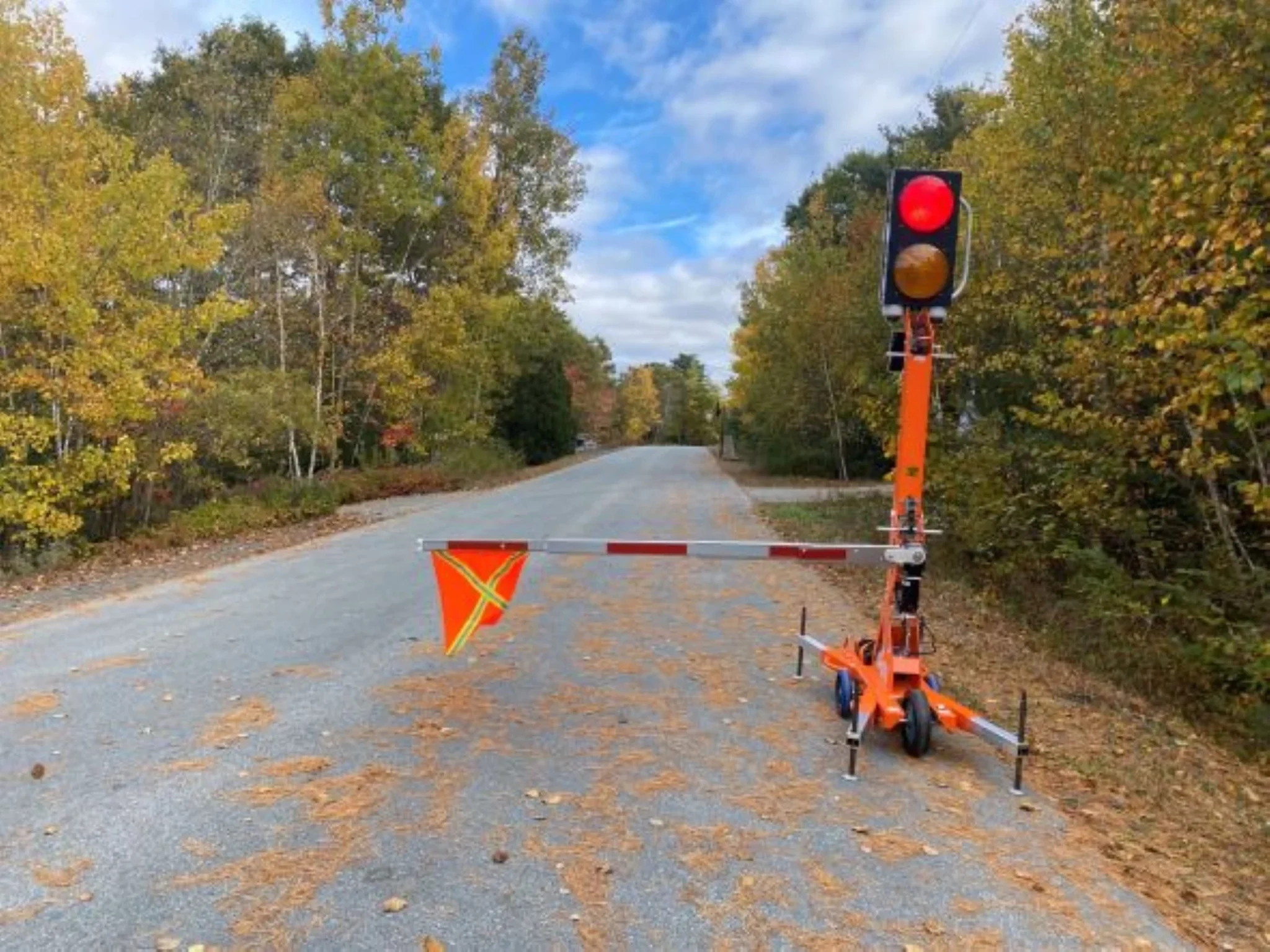
The Guardian SmartFlagger is an Automated Flagger Assistance Device (AFAD) that removes the need for a human flagger to stand in front of traffic. It uses GPS, a 5-band antenna, and 360-degree cameras with night vision to give operators complete visibility and control over both ends of the work zone.
How it works
One operator controls up to four units simultaneously from a tablet, from within the work zone, or remotely via the Partner Portal. The device runs on a 60-hour battery, works without a cellular connection, and collapses to 24 inches wide for transport.
Benefits for utility contractors:
- Removes flaggers from live traffic entirely, eliminating one of the most common causes of work zone injuries.
- Stores up to 80 hours of video footage for incident documentation and compliance verification.
- Integrates with Google Maps and Waze to alert nearby drivers of the active work zone in real time.
- Eliminates overtime and travel costs associated with staffing human flaggers on long or repeat jobs.
- Folds down for compact transport and deploys quickly with a single crew member.
Guardian Smart Sign
The Guardian Smart Sign converts standard traffic signs into GPS-tracked, compliance-verified smart devices. The system monitors sign location, spacing, and orientation in real time, alerting managers instantly if a sign is knocked over, moved, or left behind after a job.
How it works:
The Guardian Smart Sign bolts directly onto aluminum, wood, or roll-up signs with no special setup required. It logs setup details automatically, checks placement against the approved traffic control plan, and generates shareable PDF compliance reports for DOTs, inspectors, or clients.
Benefits for utility contractors:
- Confirms every sign is placed correctly without requiring a manager to drive to each site.
- Generates automatic PDF compliance reports that can be shared with DOTs and inspectors instantly.
- Sends real-time alerts if a sign is moved, knocked over, or stolen during an active job.
- Reduces liability exposure by creating a defensible digital record for every project.
- Cuts wasted site visits and reduces the administrative burden of manual compliance checks.
Guardian Cone Pro
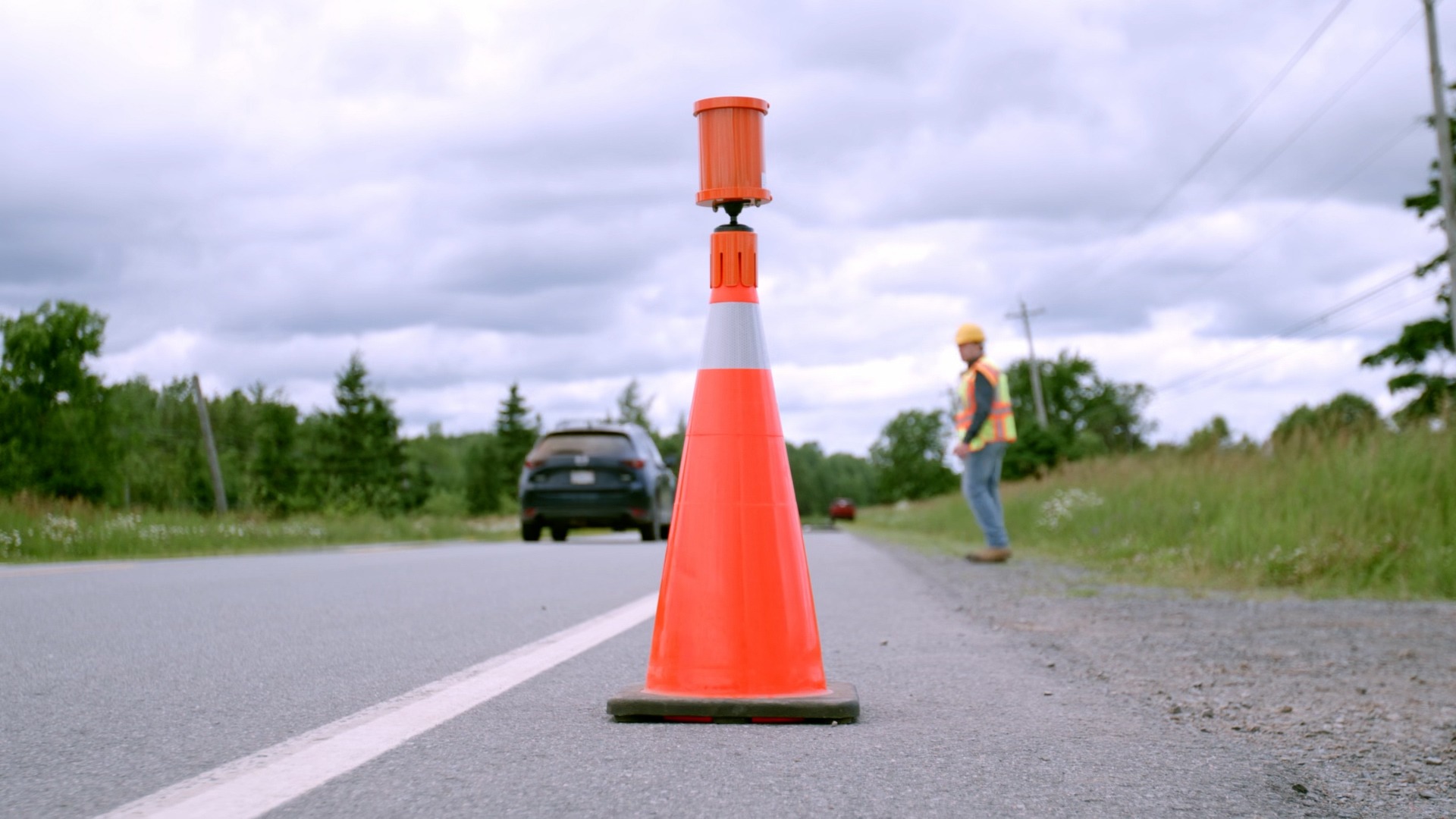
The Guardian Cone Pro is an advanced traffic spotter that extends the safety zone around a work site and provides real-time alerts when vehicles approach at unsafe speeds.
Using radar, GPS, and cellular connectivity, it monitors approaching traffic and helps crews stay aware of potential hazards before they reach the work area.
How it works:
The device is placed at the perimeter of the work zone and can detect approaching vehicles from up to 500 feet away.
Workers wear a lightweight alert device that vibrates when a vehicle enters the detection zone at an unsafe speed. The system also records vehicle speed and traffic volume data, which can be accessed through the Partner Portal for reporting and analysis.
Benefits for utility contractors:
- Provides advance warning of approaching vehicles, helping crews react sooner to potential hazards.
- Detects approaching traffic and alerts workers before vehicles reach the active work zone.
- Tracks its GPS location to support compliance and asset visibility on larger job sites where equipment may move throughout the day.
- Logs vehicle speed and count data that can support incident reports or regulatory reviews.
- Works alongside the SmartFlagger and Smart Sign as part of a fully connected work zone.
ROADS: Traffic control and dispatch software
ROADS (Remote Onboarding And Dispatch System) is a web-based operations platform built specifically for traffic control companies. It manages the full lifecycle of a job, from quoting and contract management to crew dispatch, time tracking, payroll, and invoicing, all within a single system.
How it works:
ROADS features a drag-and-drop dispatch board that gives managers real-time visibility into crew availability, assignments, and equipment across multiple job sites.
Field crews confirm assignments through a mobile app, while the platform supports more than 2,000 crews daily across active traffic control operations.
Benefits for utility contractors:
- Centralizes dispatch, scheduling, time tracking, payroll, and invoicing into one connected platform.
- Eliminates dispatch gaps and billing errors caused by disconnected office and field systems.
- Gives managers a live view of crew status and equipment allocation across multiple job sites.
- Speeds up payroll and billing cycles by pulling from the same operational data used in the field.
- Scales across multiple offices and regions, making it suitable for large utility operations.
Choosing the right traffic control technology partner
The effectiveness of any traffic control technology depends not only on the equipment itself but also on the expertise behind it.
Utility contractors need solutions that are built for demanding field conditions and backed by a team that understands the industry’s safety and compliance requirements.
Site 20/20 offers a suite of technologies specifically for utility work zones, including the Guardian SmartFlagger, Guardian Smart Sign, Guardian Cone Pro, and ROADS platform. Together, these solutions help contractors manage traffic control operations more efficiently.
Frequently asked questions
How does smart traffic control technology improve safety?
Devices like the Guardian SmartFlagger allow one operator to manage multiple units from a safe distance, while systems like the Guardian Cone Pro alert workers immediately when a vehicle approaches at an unsafe speed.
How can technology reduce work zone risks?
Technology reduces work zone risks by creating distance between workers and moving vehicles, improving driver awareness through navigation app integration, and giving managers the data they need to identify and fix safety gaps before incidents occur.
What is an Automated Flagger Assistance Device (AFAD)?
An AFAD is a device that is remotely operated via tablet, provides 360-degree video monitoring, and can run for up to 60 hours on battery without requiring a cellular connection.
Can traffic control technology be used on utility sites with no cellular signal?
Yes. The Guardian SmartFlagger connects via a 5-band antenna and local LAN, allowing operators to run the system reliably even where cell service is limited or unavailable.
How does GPS tracking improve compliance on utility job sites?
GPS tracking ensures that traffic signs and cones are placed in the correct locations and maintained throughout the duration of a job. The Guardian Smart Sign monitors sign placement against the approved traffic control plan and sends alerts if anything is moved or missing.