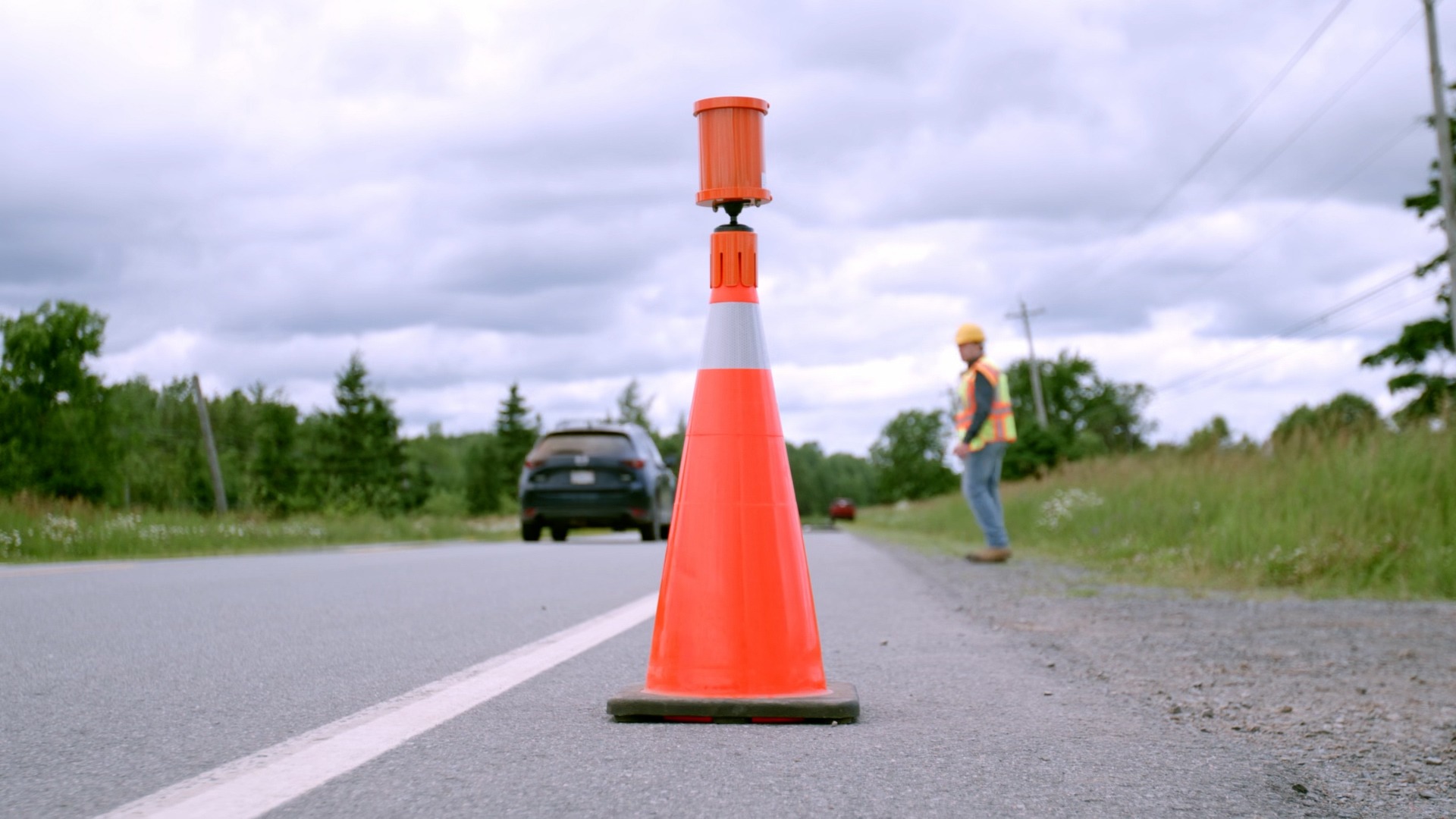
Effective work zone traffic control plays a critical role in protecting workers, drivers, and pedestrians. Whether managing a short-term lane closure or a long-term construction project, choosing the right method directly impacts safety, efficiency, and compliance.
Two widely used approaches are automated flagger assistance devices (AFADs) and traditional flagging performed by trained personnel. Each method has its own strengths, limitations, and ideal use cases. Understanding these differences helps project managers make informed decisions that align with safety goals and operational needs.
What are AFADs, and how do they work?
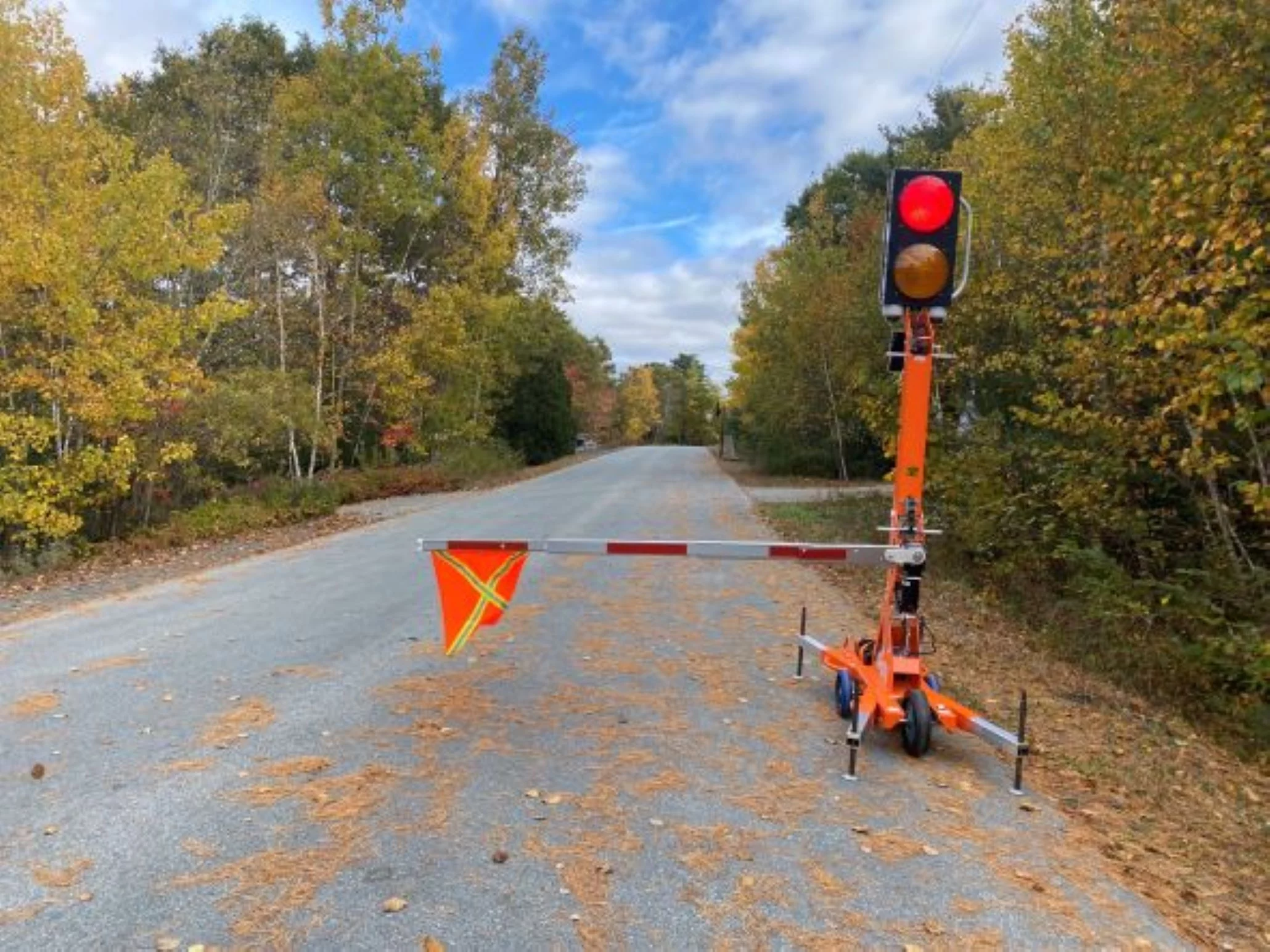
An automated flagger assistance device is a remotely operated system designed to control traffic flow without placing workers directly in active lanes. These devices typically include a stop-and-slow sign, flashing lights, and a mechanical arm that moves in response to operator commands. The operator controls the system from a safe distance, often from behind barriers or outside the roadway.
This approach improves visibility and consistency in signaling. Drivers are more likely to recognize standardized signals, which reduces confusion and improves compliance. AFAD traffic control is commonly used in situations where traffic patterns are predictable and where reducing worker exposure is a priority.
What is manual flagging?
Manual flagging traffic control involves trained personnel physically directing traffic using stop-and-slow paddles, hand signals, and clear communication techniques. A traffic control flagger is positioned near or within the roadway to manage vehicle movement and help ensure the safety of both drivers and workers.
This method relies on human awareness and decision-making. Flaggers can quickly respond to unexpected situations such as changing traffic conditions, equipment movement, or emergency vehicles. Their ability to communicate directly with drivers and coordinate with on-site crews makes manual flagging a flexible solution for dynamic environments.
Key differences between AFADs and manual flagging
Safety considerations
Safety is often the primary factor when comparing these two methods. AFADs allow operators to remain outside active traffic lanes, thereby significantly reducing the risk of accidents. This separation from moving vehicles is a major advantage in high-risk environments.
Manual flagging, on the other hand, places workers closer to traffic. While proper training and protective equipment help mitigate risks, exposure remains higher compared to automated systems.
Efficiency and traffic flow
AFADs provide consistent and predictable signaling, which can improve traffic flow, especially on straight roads with moderate traffic volumes. Drivers tend to respond well to uniform signals, which reduces delays and confusion.
Manual flagging depends on the flagger’s skill and coordination. While experienced personnel can manage traffic effectively, variations in timing and communication may impact flow in certain situations.
Cost and resource requirements
Using an automated system involves an upfront investment in equipment, but it can reduce long-term labor costs. One operator can manage multiple devices, which lowers the number of personnel required on-site.
Manual flagging requires fewer initial resources but involves ongoing labor costs. For longer projects, these costs can increase due to wages, travel, and scheduling requirements.
Video documentation and driver compliance
Some AFADs, such as the Guardian SmartFlagger, are equipped with 360-degree cameras that provide live video to the operator and can store up to 80 hours of onboard footage. Drivers are more likely to comply with traffic control when cameras are visible, improving work zone compliance. This footage also creates a documented record of intrusions, near-misses, and incidents, which reduces liability exposure for contractors.
Manual flagging offers no equivalent documentation. Incidents rely on witness accounts rather than recorded evidence.
Connectivity and remote monitoring
Modern AFAD systems like the Guardian SmartFlagger use a GPS receiver and a directional base antenna to support remote operation at distances of up to 1.2 miles. Operators can monitor live camera feeds from within the work zone or from an off-site location through Site 20/20’s Partner Portal. The system can also integrate with platforms such as Google Maps and Waze to alert nearby drivers to the work zone, improving situational awareness before vehicles approach the flagged area.
However, these connected capabilities are not standard across all AFADs; many rely on shorter-range radio control without GPS, video, or external driver-alert integrations.
A manual flagger relies on radio communication with other crew members and has no comparable driver-alert capability outside of the standard physical work zone signage already in place.
Benefits of AFAD traffic control
While features vary across AFADs, the following highlights the benefits of the Guardian SmartFlagger.
- Removes the operator from active traffic, directly reducing struck-by risk.
- One operator can manage up to four units simultaneously from a safe position.
- 360-degree cameras with up to 80 hours of onboard storage reduce liability exposure.
- Google Maps and Waze integration alert drivers before they reach the work zone.
- 60-hour battery life supports long shifts and overnight operations without external power.
- No overtime, sick leave, or accommodation costs for the device itself.
- Operates without a cell connection, suitable for remote or low-signal job sites.
- Designed as a lightweight, compact system that can be deployed using a single pickup truck.
Benefits of manual flagging
- Immediate decision-making allows for better handling of unpredictable scenarios that require on-the-spot adjustments.
- Flaggers can interact with drivers, pedestrians, and crew members to coordinate movements and improve overall safety.
- Requires basic tools such as paddles and safety gear, making it easy to deploy for short-term or smaller projects.
- Ideal for emergency work or temporary traffic control situations where rapid response is required.
Best uses for each method
When is AFAD traffic control the right choice?
AFAD traffic control performs best on high-speed roadways, rural highways, and interstates where vehicle speeds are elevated, and the risk of a struck-by incident is highest. It is also well-suited for long-duration projects that require consistent, reliable traffic control across multiple shifts, including overnight work, where operator fatigue becomes a real factor.
Projects in remote areas with limited cell coverage can also benefit from off-grid AFAD systems, such as the Guardian SmartFlagger, which operates independently of cellular networks.
When is manual flagging the right choice?
Manual flagging remains a practical solution for short-duration tasks, low-speed urban environments, and situations where the work zone layout changes frequently during the day. Emergency maintenance scenarios that require immediate deployment without equipment staging also favor manual flagging.
How to choose the right traffic control solution?
Selecting the right approach depends on factors such as traffic volume, project duration, work zone complexity, and safety requirements. Organizations should evaluate both immediate needs and long-term benefits when deciding between automated and manual methods.
Working with experienced providers like Site 20/20 ensures access to advanced solutions and expert guidance. This helps support a traffic control strategy that improves safety, reduces risk, and enhances overall efficiency.
Frequently asked questions
Are AFADs safer than manual flagging?
Yes, automated systems like the Guardian SmartFlagger are generally safer because they allow operators to manage traffic remotely, reducing direct exposure to moving vehicles.
How many AFAD units can one operator control?
With the Guardian SmartFlagger, one operator can manage up to four units simultaneously from a safe location using a tablet and live video monitoring.
Does the AFAD work without a cell connection?
Yes. The Guardian SmartFlagger is designed to operate independently of cellular networks. Its dual AGM batteries provide up to 60 hours of runtime, and its 5-band antenna system supports local LAN connectivity for remote operation within the work zone, even in areas with poor or no cellular signal.
What is the biggest advantage of AFADs?
Its ability to remove workers from live traffic while providing full visibility and remote control makes it a highly effective safety solution.
Can AFADs work in remote locations?
Yes, they are designed to operate in areas without reliable cellular connectivity, making them suitable for remote job sites.
How does automation improve traffic compliance?
Automated systems use clear signals and visible monitoring tools that encourage drivers to follow instructions more consistently, reducing violations and improving safety.